


For those pursuing a change in their body weight, you have most likely stepped on the scale in the morning discouraged by an increased number. The reality is the number on the scale is inaccurate.
There are a lot of factors that affect your weight; that number on the scale can be misleading due to numerous factors. The key though is to use the best practices to determine if you're making progress accurately.
I am cutting to prepare for another bulk; yesterday I woke up weighing 168 lbs, but today I woke up at 166. Did I lose 2 pounds overnight? No, but the change is still significant in my progress.
Let's break down the fundamentals of weighing yourself with examples.
When should I weigh myself?
The most important factor is that you are weighing yourself simultaneously every day. It doesn't need to be at a specific time, but best practice is right as you wake up.
The best time to weigh yourself is right as you wake up with minimal clothing, preferably after you use the restroom.
I weigh myself in the morning after the restroom but before the shower.
Log your weight daily
You need to monitor your weight daily and keep track of the amounts. Without having a log of your weight, it will be difficult to properly track your process.
Finding your "real" weight
If you follow the two previous steps, you will have an accurate measurement and a log of those measurements.
Now you want to take the seven measurements from the week, add them up, and then divide by 7 for the average. The average of these values is the closest to the "real" weight we can get.
Compare your averages week by week
Here is the most important factor in properly tracking your weight. Compare the averages week by week to see your true weight loss. Here is an example:
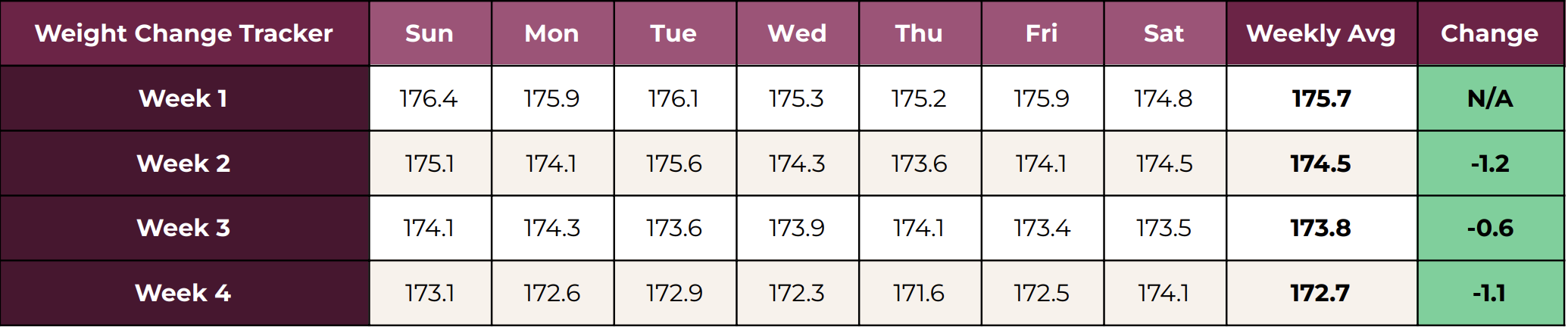
As you can see, each day of the week had a different value, sometimes increasing, but at the end of the week, there was still a decrease in weight based on the average.
Why is this so important?
As stated previously, weight fluctuation can give an inaccurate representation of progress. Let's focus on week four from the example above:

On week 4, the starting weight for the week was 173.1 and the ending weight was 174.1. Based on this, you might assume that you gained a whole pound that week.
However comparing the average to the previous week, you dropped 1.1 pounds off your average.
This is far too common for those trying to lose and gain weight. They will assume they are gaining weight based on the starting and ending values, which is inaccurate.
This insight is essential to optimize your plan.
If you were under the false perception you gained a pound, you might cut calories, increase training, or get discouraged altogether; when the reality is you are losing weight.
This is why many people feel like they are doing everything right, but not getting results. Your training and calories may be spot on, but you aren't seeing the true results.
Resources for tracking your weight correctly
If you follow everything explained in this article, you will be tracking your weight using best practices.
Apps like MyFitnessPal and LoseIt! have built-in functionality to track correctly. The Health App on iPhone also allows for tracking weight day by day.
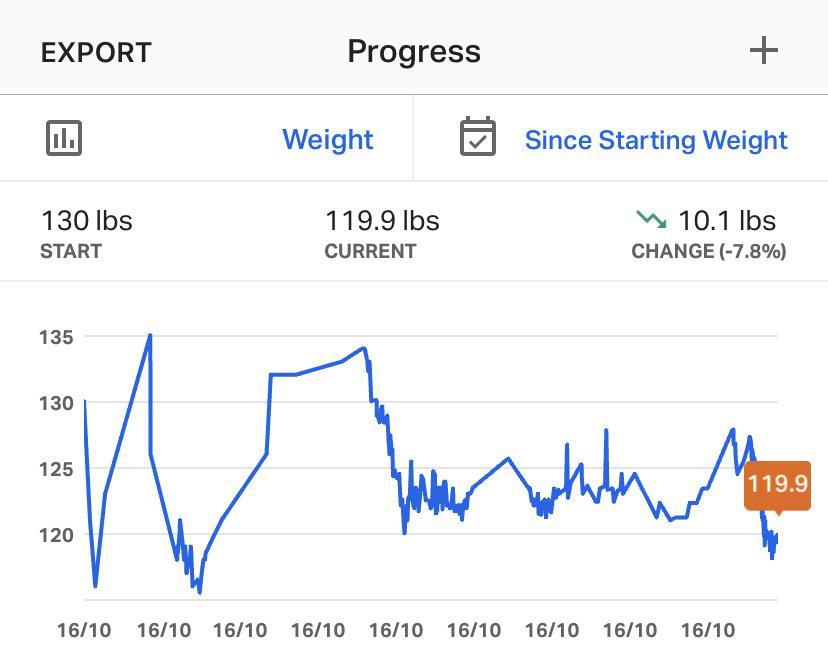
The spreadsheet used in my personal training is also linked here as a free resource for you. Input your daily weigh-ins: it will automatically track the average and show your gain or loss per week
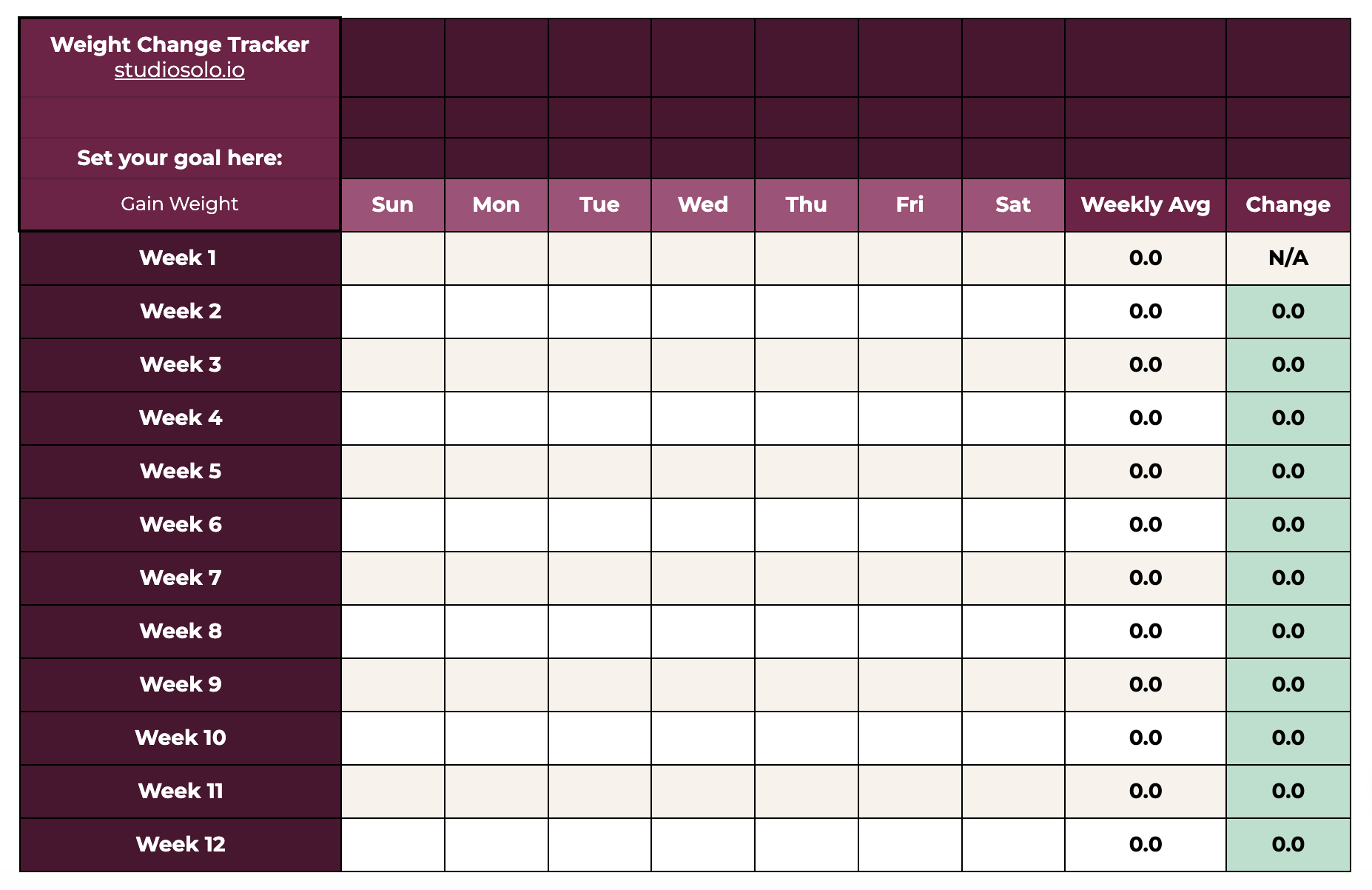
This spreadsheet is a great tool to track the data and we made it available for completely free.